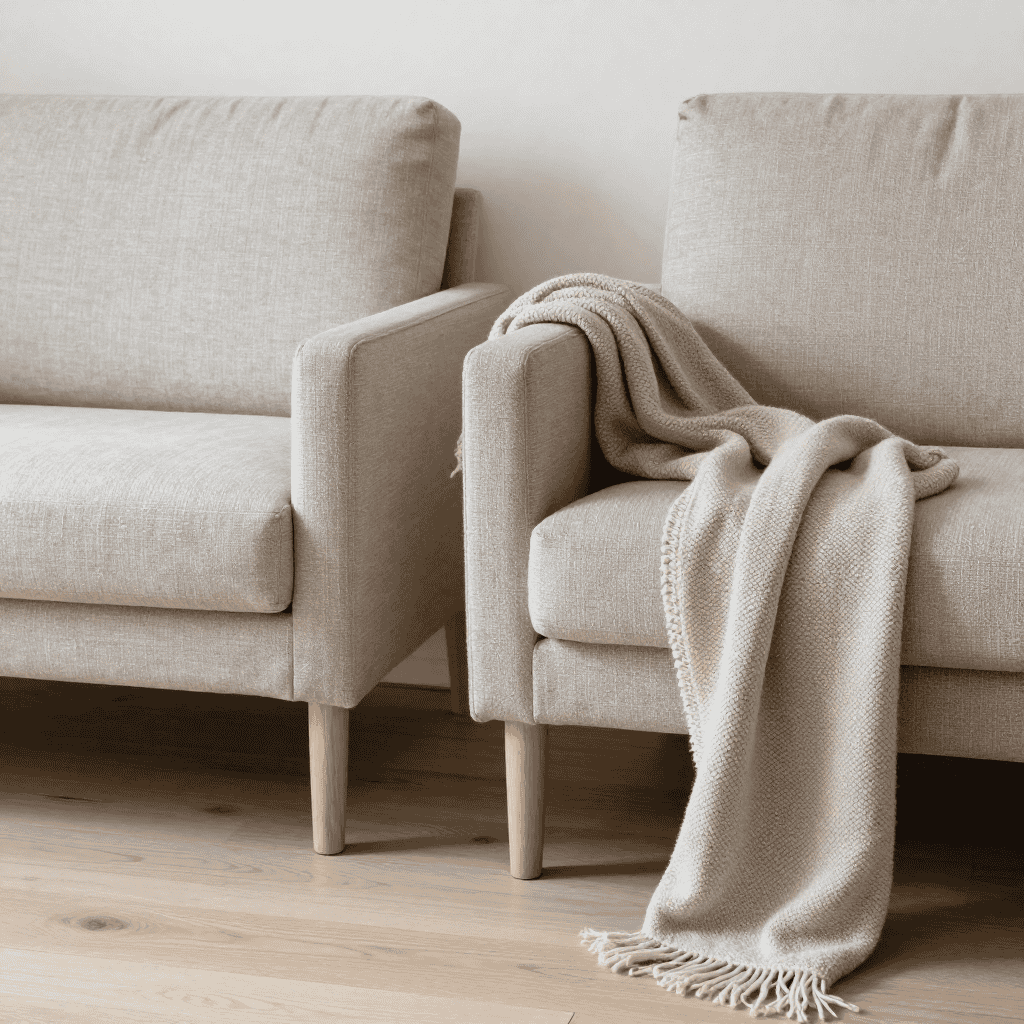
Our philosophy guides every design decision, creating spaces that respond to light and materiality
We approach interior design as spatial composition. Each project responds to light, structure, and function through careful material selection and placement.
Space exists through light. Without light, space cannot be perceived. Our design approach reflects this understanding. Natural light determines layout. Artificial light supplements when needed.
Light changes throughout the day. Morning light differs from afternoon light. North light differs from south light. We respond to these qualities, not fight them.
Materials respond to light. Some reflect. Some absorb. Some transmit. These responses define how we perceive space. Material selection prioritizes how surfaces interact with light.
Material relationships create character. Stone against wood. Metal against fabric. These combinations define atmosphere. We test relationships through samples, not assumptions.
Texture adds depth. Rough against smooth. Matte against gloss. These contrasts create interest through materiality, not decoration. We layer textures for complexity.
Materials age. Natural stone develops patina. Wood darkens. Metal oxidizes. These changes are part of the design, not flaws to prevent. Material selection favors surfaces that age gracefully.
Proportion determines how space feels. Objects relate to room dimensions. A large sofa in a small room feels heavy. A small table in a large room feels lost. We scale furniture to space.
Ceiling height affects perception. High ceilings allow taller elements. Low ceilings require lower profiles. Our approach adapts to existing conditions rather than fighting them.
Furniture becomes part of the architecture. Built-in elements replace freestanding when appropriate. Continuity creates calm. We integrate rather than add.
Practical function takes precedence. Aesthetically pleasing spaces that lack functionality are unsuccessful. Our approach harmonizes visual appeal with real-world usability. These elements complement rather than conflict.
Storage solutions are seamlessly incorporated. Disorder is removed through thoughtful design rather than personal effort. Surfaces remain accessible. Our designs reflect genuine lifestyle patterns.
Durability matters. Surfaces must withstand use. Materials must age gracefully. Investment in quality provides long-term value. Material selection emphasizes longevity.
Our philosophy guides every design decision, creating spaces that respond to light and materiality
We approach design like editorial composition. Each element has a reason for its position. Nothing is arbitrary. Nothing is decorative for decoration's sake.
Layouts are asymmetrical. Text columns are offset. Images are positioned for rhythm, not symmetry. Visual interest emerges through composition rather than pattern.
Spaces tell stories. Not emotional stories, but spatial stories. How light moves. How materials meet. How people move through. These narratives guide design.
Refinement comes from restraint. We remove before we add. Simplicity requires discipline. Every element must earn its place. Less is more when less is intentional.